Framework
The operational friction map
A simple way to find and fix the real blockers to execution — before another tool is bought.
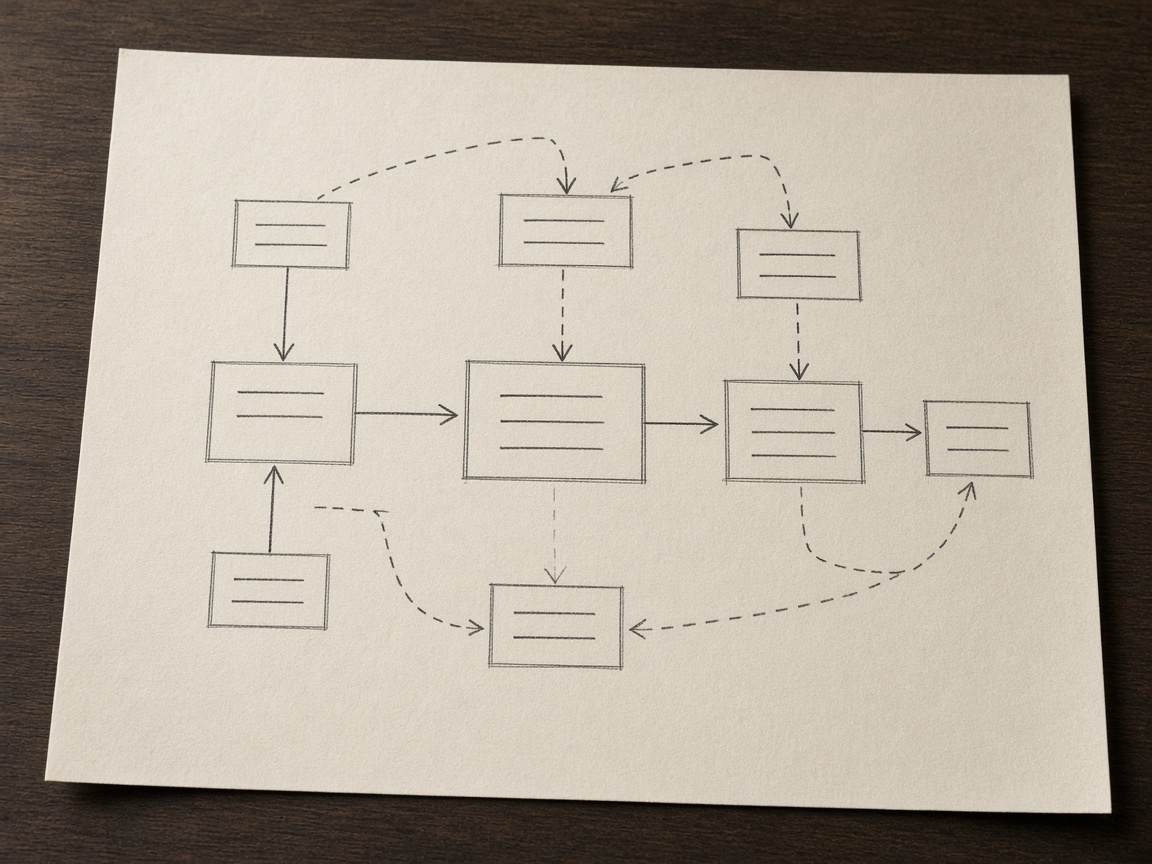
The friction map is a working document, not a workshop souvenir. It answers one question: where does work slow down, get redone, or wait on a person who should not be the system.
Inputs
A handful of interviews with the people who touch the critical path — not a survey of the whole company. A look at the tools that actually hold orders, cash, tickets or inventory. A sample of decisions from the last month that were late, reversed or escalated.
How it is drawn
Each friction is one line: the step, the symptom, who feels it, what it costs in time or risk, and whether it is a missing rule, a missing system, or a missing owner. Those three causes are kept separate on purpose. A missing rule will not be fixed by software. A missing system will not be fixed by a new meeting.
The lines are then ordered by cost and by how soon a change could be felt. Not by how interesting the technology is. The top of the list is usually unglamorous: duplicate entry, an undefined approval, a report nobody trusts, a handoff with no definition of done.
The deliverable
A one-page map plus a ranked list. Each item names the next move — write the rule, connect two records, or assign an owner — and what will be measured in 30 days. Anything that cannot be tied to a move does not stay on the map.
This is the artifact I use before a roadmap. Without it, a roadmap is a list of projects. With it, a roadmap is a sequence aimed at the leaks that are already expensive.