For founders and directors of growing mid-sized companies

Your company grew faster than its structure. I help you fix that.

Executive diagnostic, operational design, and fractional technology leadership to turn growth chaos into clear execution.

What you feel

Everyone works hard. Nothing moves with enough clarity.

Your company grew. But the structure, processes, and systems did not grow with it. There are meetings, messages, urgencies, and apparent owners — but few decisions survive the day to day. The problem is not lack of effort. It is lack of system.

Operations ERP CRM Operations Finance AI Teams

Isolated systems

Sales, operations, finance, and technology work with different data, duplicated processes, and weak traceability.

AI without real adoption

There is interest in generative AI, but no clear criteria for turning it into safe, useful, measurable workflows.

Automation without strategy

Teams automate what is visible, not necessarily what releases the most operational capacity or reduces the most risk.

Stuck execution

Everyone is busy, but priorities keep changing, ownership is unclear, and leadership loses visibility.

Point of view

Technology does not scale a disorganized operation. It makes it more expensive.

Automating chaos only scales chaos.

AI does not fix broken processes.

A dashboard without trust is not visibility.

Every technology initiative needs an owner, a metric, and a stop criterion.

The method

Four steps to turn operational complexity into measurable clarity.

I work as principal consultant and fractional technology director to diagnose, prioritize, and install an execution system that connects business, operations, technology, data, and AI.

  1. 01

    Executive diagnostic

    Interviews, tool review, critical processes, friction, data, risks, and automation opportunities. Deliverable: current-state map.

  2. 02

    Friction map

    Identification of bottlenecks, unnecessary manual work, isolated systems, operational debt, and scattered decisions. Deliverable: friction ranked by impact.

  3. 03

    Executive roadmap

    Initiatives organized by impact, complexity, risk, dependency, owner, metric, and execution horizon. Deliverable: roadmap with decision criteria.

  4. 04

    Execution governance

    Cadence, dashboard, owners, checkpoints, metrics, and criteria for deciding what to buy, build, integrate, or stop. Deliverable: installed tracking system.

Target outcomes

Less invisible work. More executive control.

The goal is not technology for its own sake. The goal is to release operational capacity, reduce unnecessary complexity, and turn technology into business advantage.

Track record

Senior experience in real technology, real operations, and real scale.

17+ years in software, digital platforms, and enterprise integrations
8+ years leading engineering teams and technology execution
52 engineers led in a globally distributed organization
10M+ active users on a multi-tenant B2B SaaS platform

Relevant cases

Work that applies to companies with complex systems, data, and operations.

Media and entertainment

Enterprise integrations and AI-assisted processes

Designed flows across OMS, CRM, PIM, fulfillment, payments, and internal tools with traceability, retries, idempotency, and logging.

Result

Connected systems, clearer operations, and technical decisions aligned to business goals. Visible reduction of manual rework between teams.

High-volume B2B SaaS

Modernization, data, and execution at scale

Technology leadership for a platform with 500k+ B2B clients and 10M+ users, including event-driven architecture, data warehouse work, and engineering standards.

Result

NPS from ~60% to ~85%. Task time reduced ~40%. Clicks per flow reduced ~20%.

Enterprise consulting

Continuous delivery for enterprise accounts

Leadership of 1 to 6 Scrum teams, technical ownership, integrations, QA, support, SLAs, and business-technology communication.

Result

Turning business needs into governed, measurable, sustainable digital solutions.

Operations and services

Engineering function and internal platforms from zero

Built the team, ERP, call-center CMS, ATS, knowledge base, KPIs, OKRs, and executive reporting cadences.

Result

Full operational transformation through internal systems, clear indicators, and real organizational adoption.

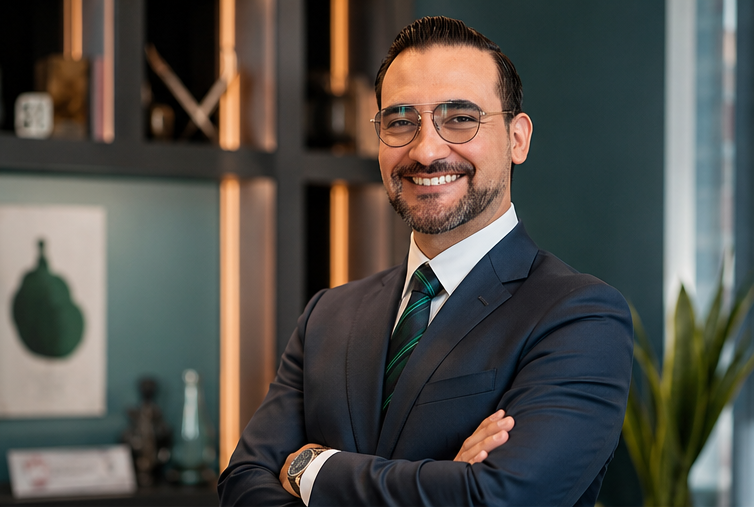
Ricardo Aguilera Zamarripa

Principal consultant

Ricardo Aguilera Zamarripa

17 years at the intersection of technology, strategy, and operations. I have led engineering teams of up to 52 people, built SaaS platforms with 10M+ active users, and supported mid-sized companies that grew faster than their structure. What I am hired for is not my resume. I am hired because I turn organizational complexity into executive clarity — and leave behind a system the team can sustain.

  • PMP, Professional Scrum Master, MBA / Executive MBA, and executive leadership training.
  • Experience across Mexico, the United States, Latin America, and Asia.
  • Technical depth in APIs, integrations, cloud, data, architecture, and internal systems.
View full profile

This is for you if...

You recognize any of these symptoms

Signals this applies

  • Your company grew, but operations became confusing, slow, and dependent on manual decisions.
  • The founder or director is still the main control system of the company.
  • Teams are busy, but priorities shift every week and progress is not visible.
  • Technology, operations, and business do not speak the same language or share the same priorities.
  • There are AI or automation initiatives running, but no one knows which to prioritize or how to measure them.

Bad fit

  • Companies without budget or without a sponsor who can make decisions.
  • Organizations that want AI, Agile, or digital transformation as a trend.
  • Teams looking for validation, but not diagnosis or operational change.
  • Clients who want speed without prioritization, accountability, or metrics.

FAQ

Before booking

Is this consulting, implementation, or fractional leadership?

It can start as a diagnostic and roadmap, then evolve into fractional leadership, implementation support, or initiative governance depending on urgency and internal capacity.

Do you work with tools like n8n, CRMs, ERPs, and generative AI?

Yes. The key decision is not the isolated tool, but which operational problem it solves, how it integrates with the ecosystem, who owns it, and how value is measured.

Do we need an internal technical team?

Not always. I can help define whether to use vendors, low-code/no-code, automations, existing tools, internal hiring, or custom development.

What happens after the diagnostic?

The company gets a friction map, priorities, roadmap, owners, metrics, and a clear recommendation for next steps so execution does not scatter.

Next step

If this sounds familiar, it is time to talk.

Not to sell generic consulting. To review together where execution is leaking and what minimum system your company needs to grow without breaking.